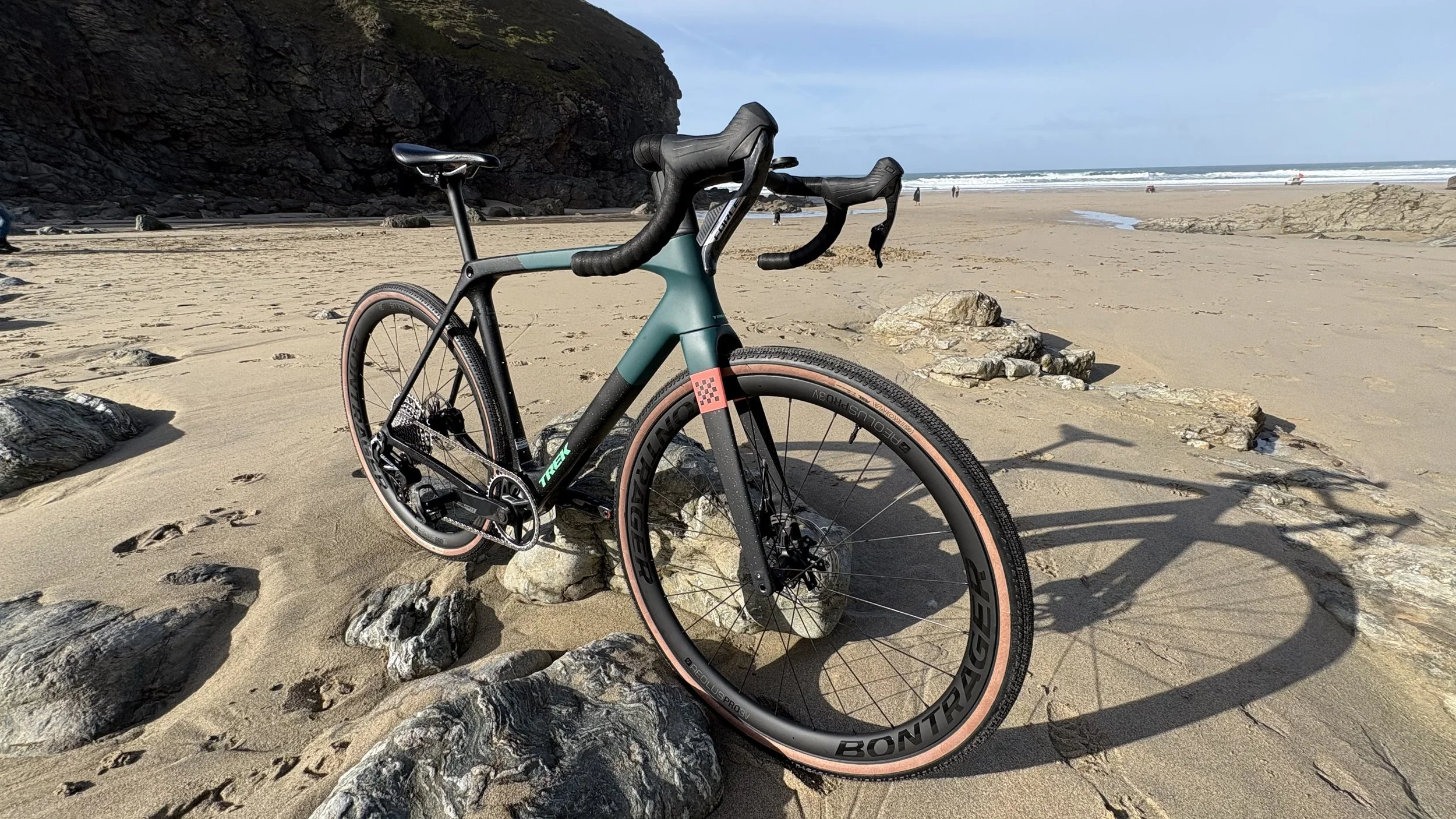
Testing the Trek Checkmate SLR 7
I’m building a new bike; I already have the stock bike, but I want to upgrade the whole groupset. It’s a new CX race bike so it has to be good on race day, but as with my current CX bike, I ride it pretty much everywhere from flatland gravel to Alpine climbs, so I also want the groupset to cope with that. Back in the summer I talked through some options with the shop mechanics and I thought I knew what I wanted, but yesterday the lads in the shop suggested something different. They showed me a prospective drivetrain fitted to this season’s Trek Checkmate SLR 7, talked me through the pros and cons and then handed it over to test for a couple of rides. Bike Chain Ricci are now keeping more demo bikes in stock; the whole point of a physical shop is that you can test your next dream ride. So, although I wasn’t planning on buying a Checkmate, lovely as it is, I could now demo the groupset.
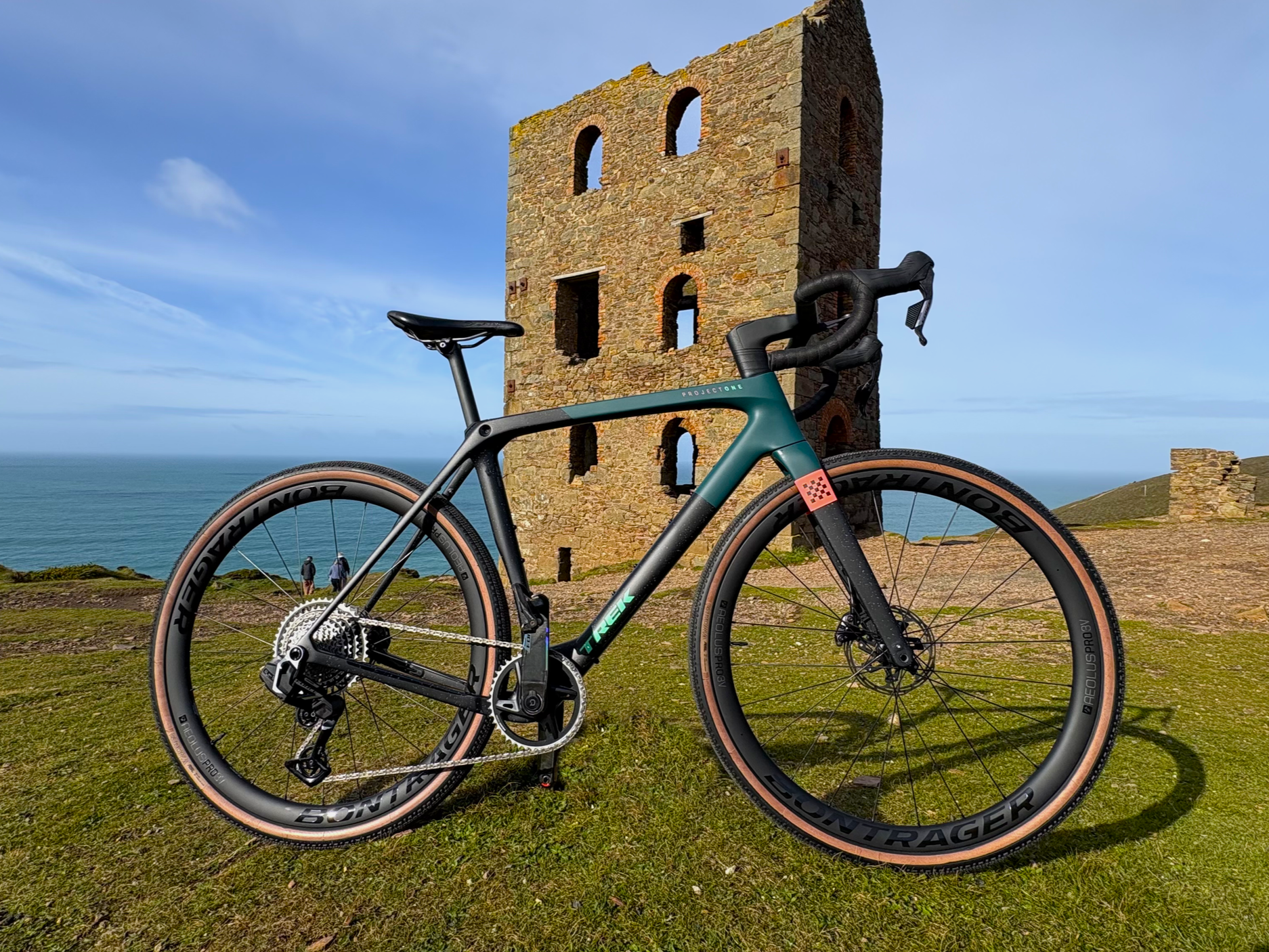
I (my coach) had two rides scheduled; an easy(ish) spin where I planned to test the groupset’s low-end climbing ability, and a hideous interval session that was going to test the bike’s (and my) top-end. The Checkmate comes with a Sram Force XPLR AXS 1x13 so I wanted to find out where its limits lie: would it spin out on the descents and sprints, or not be low enough on the climbs? Other than that, I planned to enjoy a couple of rides (or at least the first one) on a new bike and I headed out on local backroads towards the north coast.
The bike’s geometry is really nice; I’m used to using my CX on the road, so by comparison, the Checkmate’s straight line directional stability makes it really easy to cruise on and comes as a pleasant novelty for me. It’s a longer frame design; CX bikes are quite short so you can dominate the bike, and Trek’s Checkpoint is designed more for endurance Gravel so again, it’s a bit shorter to give a more upright position. The Checkmate is a racer, it’s Trek’s fastest and lightest gravel bike, and that extra wheelbase helps with that. It feels fast, and it is fast, but you don’t feel overly stretched out.
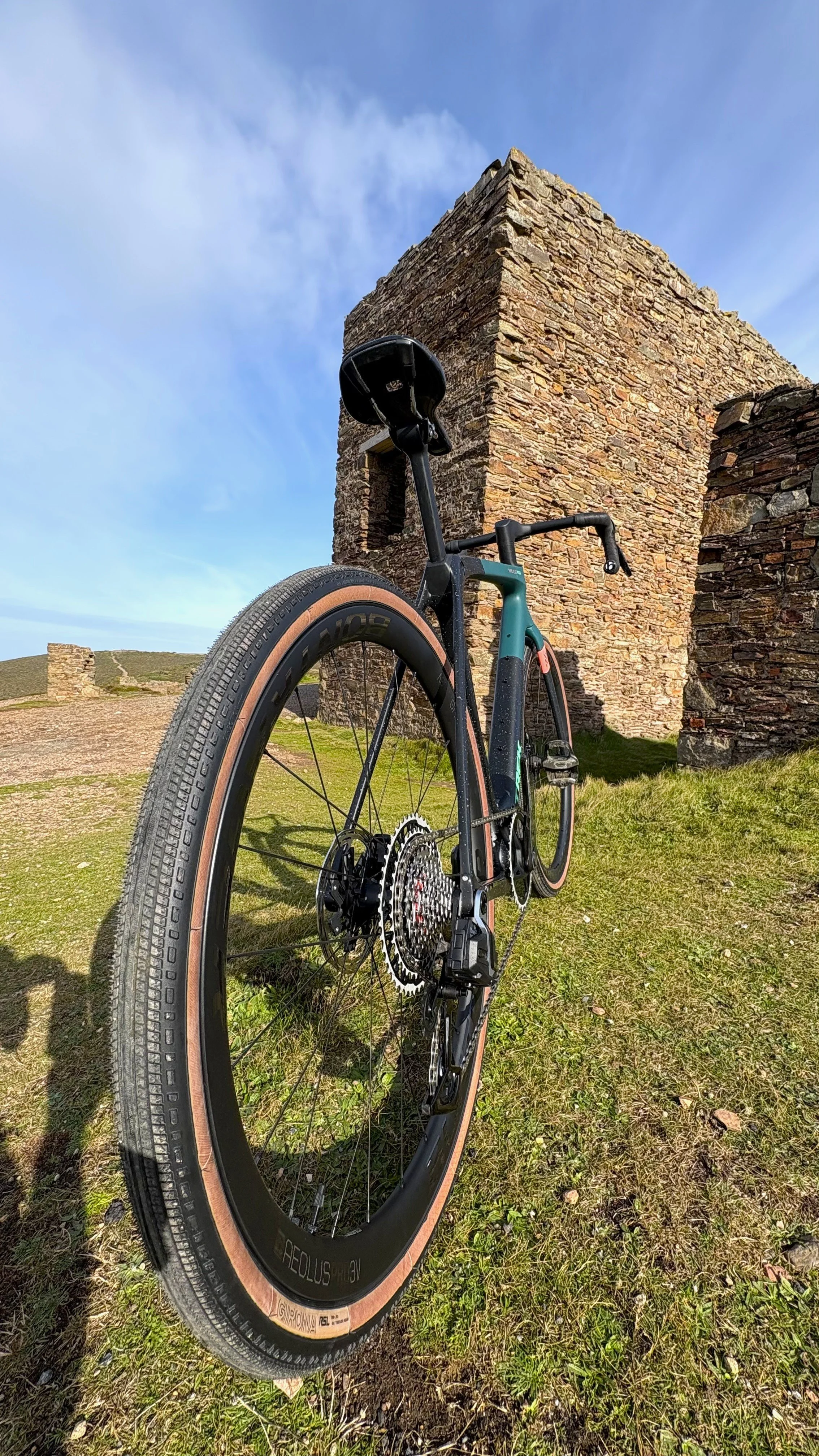
It’s also a very comfortable ride. The IsoSpeed is very clever, it keeps the frame stiff but allows flex so nothing travels up through the frame. I’m not going to embarrass myself by trying to explain how it works, but it definitely does its job. Pair that with a fat set of 42mm gravel tyres and it really takes quite a big hit before you feel it.
It’s light, silly light for a Gravel bike. I never believe the hype so I weighed it myself, fat tyres, pedals and all: 8.5kg all up. It’s a super light frame and the ‘stock’ wheels are very light too, even with the gravel tyres. If you’ve got money to burn then the top end SLR 9 is nearly 1kg lighter (quoted 7.55kg). A comparable Checkpoint is cheaper, but weighs in at 9.3kg – pick your poison.
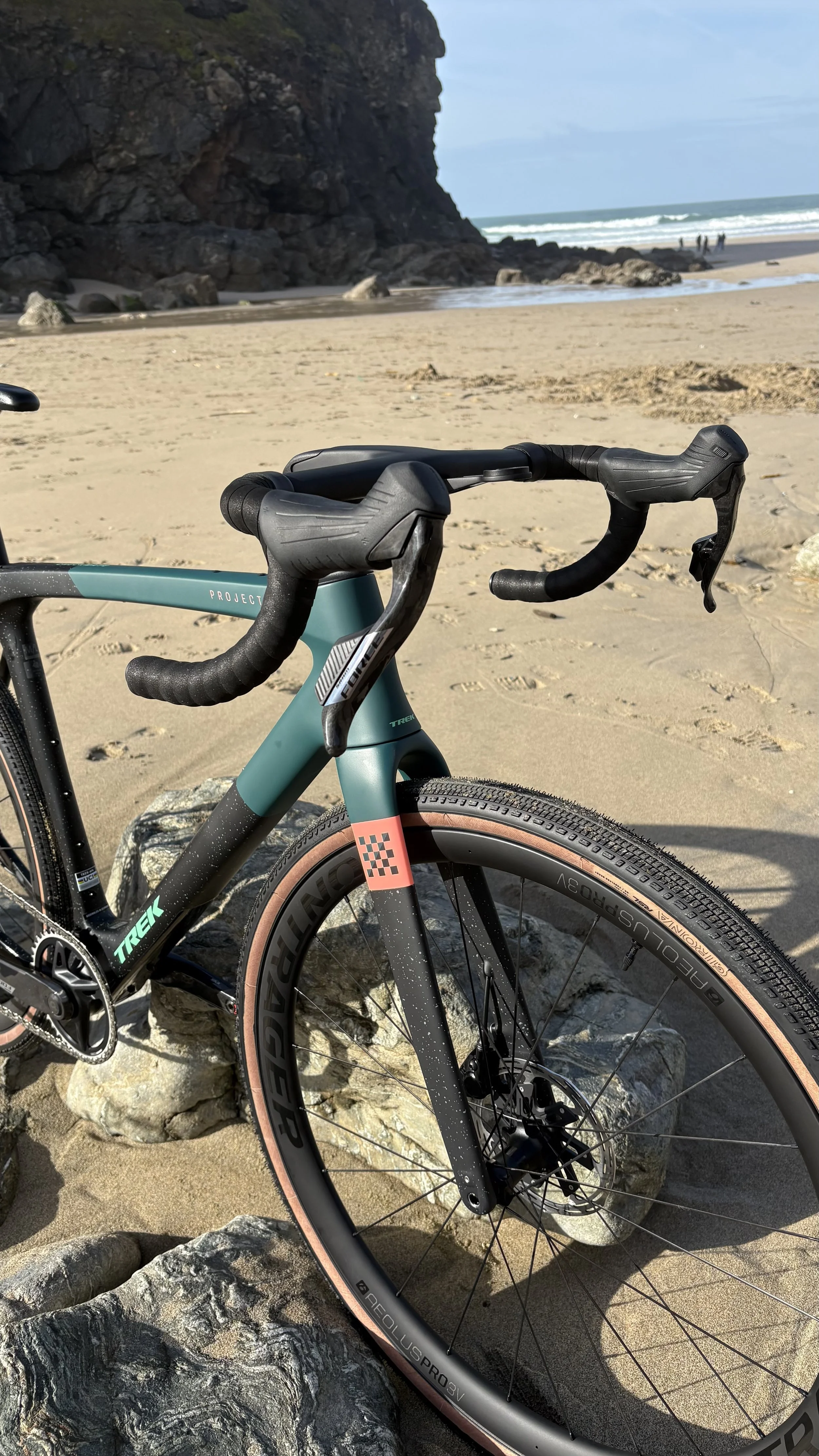
I’ve only ridden with electronic shifting a few times and it always takes me a while to retrain my hand movements. Because this is 1x, it’s set up with right hand up-shift, left hand down-shift. This left me at the start of the first climb wondering why I couldn’t shift down, but I quickly got my head together. As well as the main ‘brake’ shifter, the shifters have an additional little button on the inside of the hoods just where your index finger sits. For me it’s a summer option, it’s a bit small to find with gloves on and because the e-shifting is so light, flicking the main levers with your little finger while on the hoods is incredibly easy. The brakes have a light movement and great modulation.
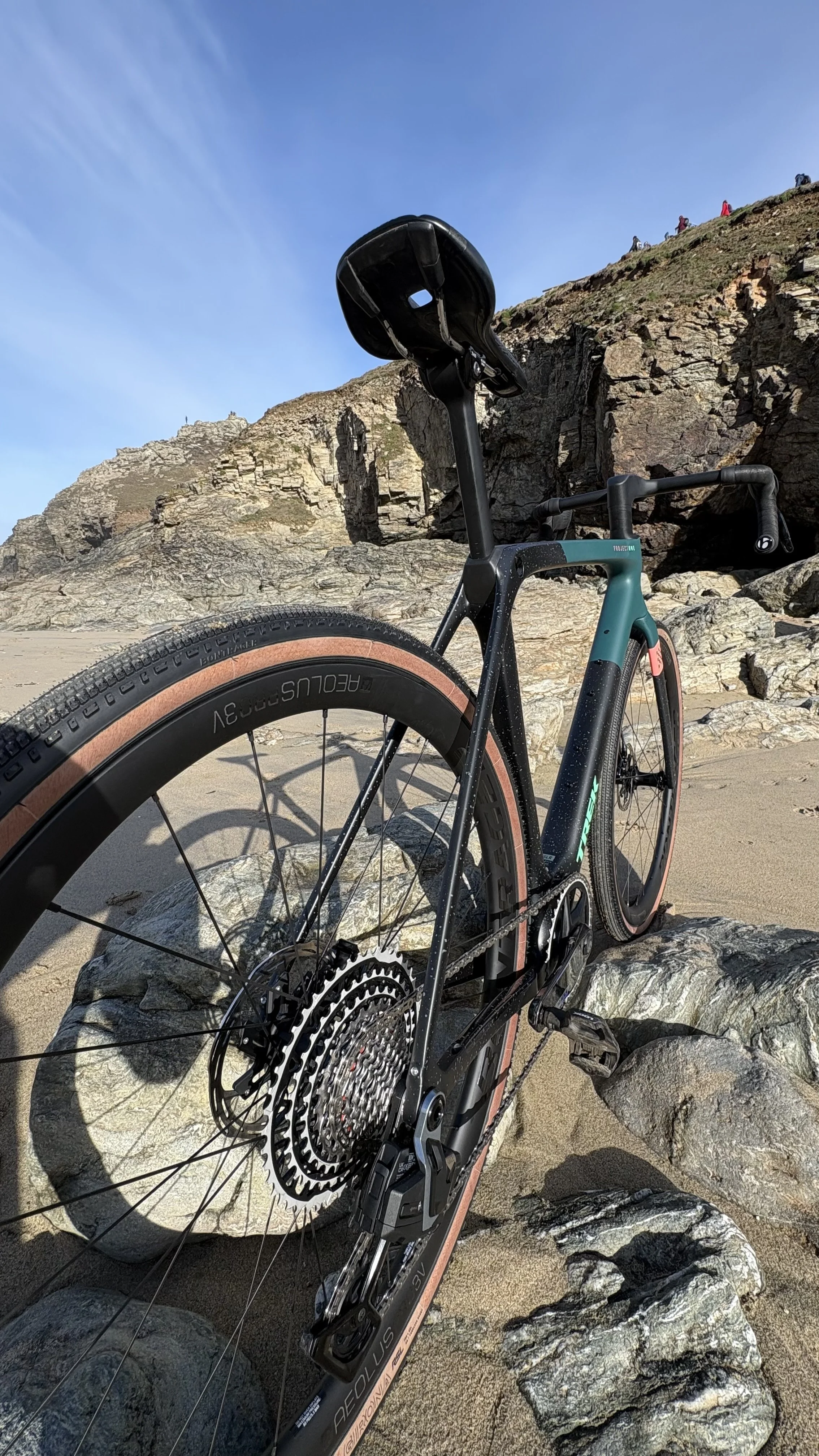
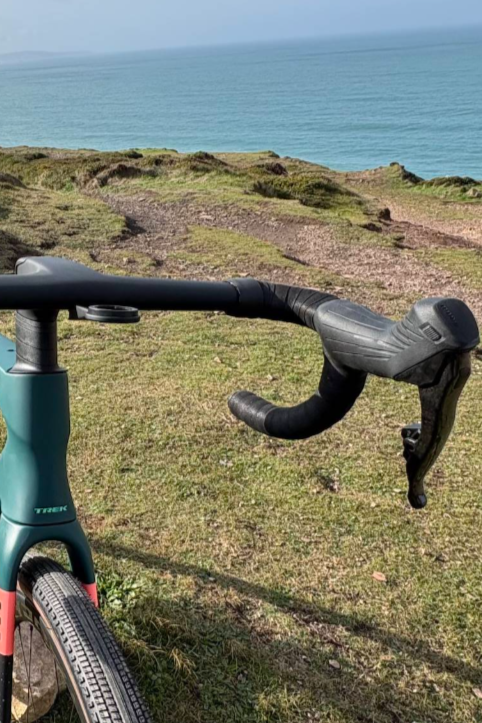
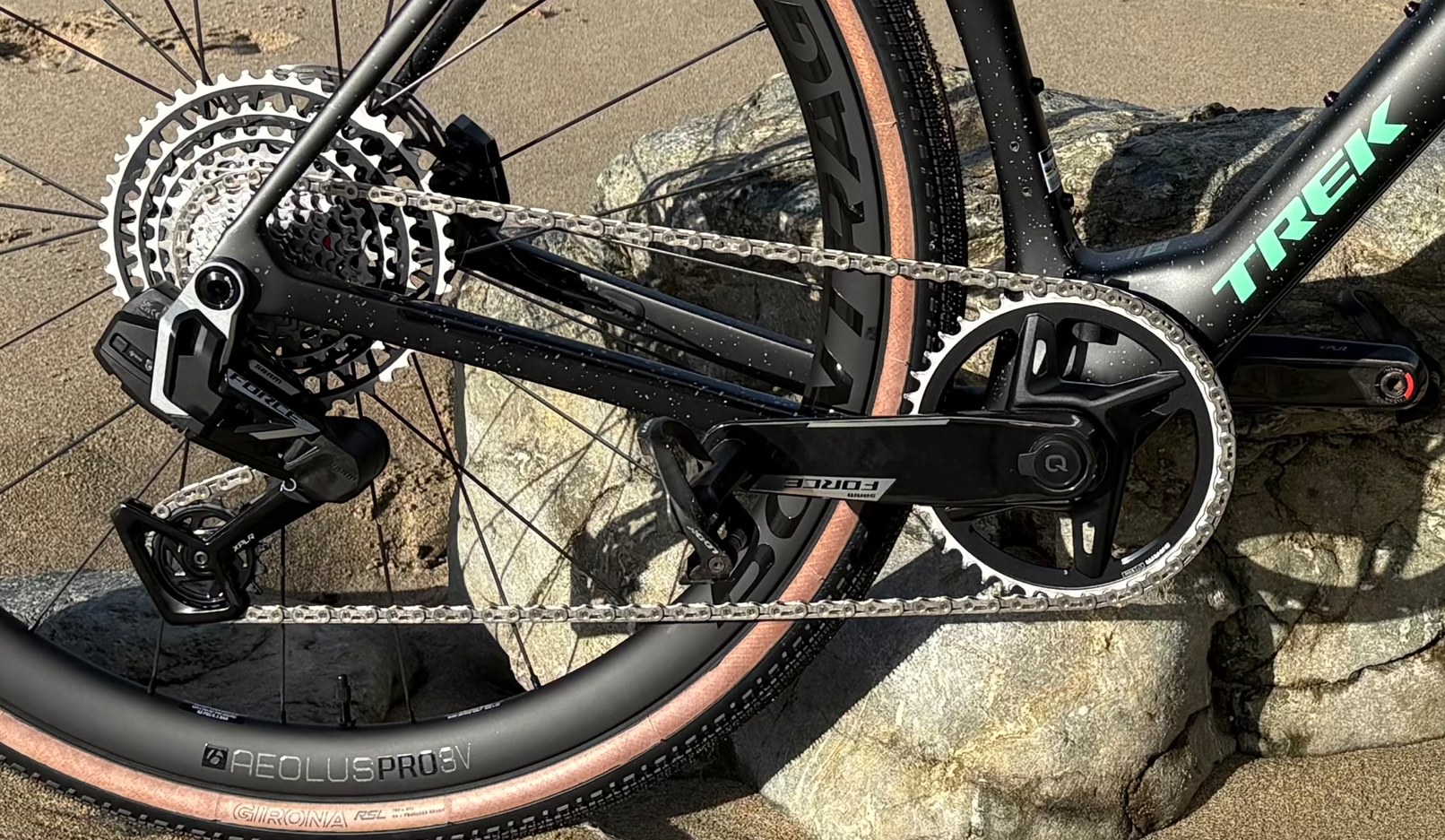
And to answer my initial question, did the drivetrain suit me, the answer is a resounding yes. The front end runs a 42T (which can be swapped out for something larger or smaller) and the cassette comes with a massive 10 – 46T. This gave me a bottom-end lower than my current 2x and a top-end that is high enough for my needs. The gear spacing on the top half of the cassette is quite closely spaced, and the lower third is where the big steps come in. In Cornwall this is fine; when the road or trails go up, they generally go up steeply so no need to be shifting between closely spaced gears. A lot of the time on local rides I’ll probably be sat in the middle of this block so the chain-line will be relatively central, and being 1x, there isn’t a front mech to clog on boggy CX races. The other great thing with this groupset is that it comes with a power-meter as standard, no need for me to look for a groupset and then a compatible PM.
Although the design is race focused, it’s got a huge number of mount points for baggage and mudguards so if you want to go bike-packing then this is certainly an option. Tyre clearance isn’t quite as large as the Checkpoint, but only by 5mm.
I really enjoyed my two rides on it and would like to have taken it through something a bit more ‘wiggly’ to see how well it cornered on short radiuses, but I have a reputation for breaking bikes and I wasn’t about to wreck a brand-new demo bike. If I wasn’t already well past the ‘n+1’ that wives and bank-managers baulk at, I’d certainly consider one.
So, I haven’t ordered a Checkmate (which did take a certain amount of self-restraint), but I have ordered the groupset and I’m looking forward to taking it out racing when the build in done.
You can demo this bike from Bike Chain Ricci or build your own version of it: Gravel Bikes in Cornwall | Trek & Kona Gravel – Saint Piran Service Course
or read the full story of the bike on the Trek Website: Checkmate Carbon